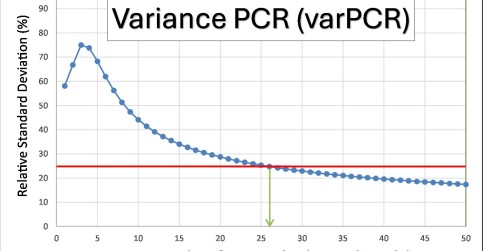
How can qPCR be used correctly and common pitfalls avoided? A new study co-authored by researchers from the Institute of Biotechnology of the Czech Academy of Sciences offers practical guidance for more accurate and reliable analysis.
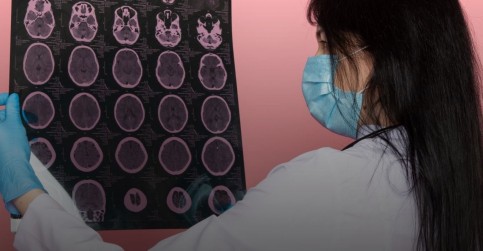
In the early stages of Alzheimer’s disease, changes occur in a key protein called tau, which normally forms a protective layer around the neuron’s internal skeleton. When modified, tau loses its protective function, leading to neuron death. The new perspective presented by a Czech-French research team uncovers the molecular consequences of tau modifications, opening new avenues for the diagnosis and treatment of early-stage Alzheimer’s disease and related disorders.
NEUROD1 as a neuronal reprogramming factor for auditory neuron regeneration
Actin Severing Promotes Motor – Independent Contractilly Propelled by the Diffusible Crosslinker Anillin
Three Decades of Discoveries from the Stony Brook STAR Laboratory
The program will be specified later.
The program will be specified later. Register using this link by March 16th
DNA and RNA Structures: From Complexity to Clarity
Imprinting Antibody Paratope by Non-Cognate Ligand Strategy to Induce Broadly Neutralizing Antibodies against Hepatitis C Virus
Consequences of Respiratory Complex II Deficiency in Endothelial Cell Physiology
Advanced Transcriptomics Solutions for Your Research
From tools to interoperable workflows for nucleic acid structures.
Regeneration-Initiating Cells at the Interface of Wound Healing and Tumor Microenvironment Remodeling
The Role of NOTCH3 Signalling in Breast Cancer Chemoresistance
The Czech startup Carta Genum received a pre-seed investment of €40,000 from the Czech Founders VC fund to develop a platform for spatial biology. The project, led by scientists Lukáš Valihrach and Daniel Žucha from the Institute of Biotechnology of the Czech Academy of Sciences, is leading to the development of virtual bioinformatics—a tool that will enable biologists to analyze large and complex scientific data without the need for programming.
Molecular Biophysics Database of raw data - MBDB
The government's decision to cut funding for research and development comes at a time when the share of public spending on science has been declining for a long time. According to Eurostat data, total R&D expenditure in the European Union is around 2.24% of GDP, while the Czech Republic continues to invest less (around 1.8–2% of GDP), which places it below the EU average and confirms the need to strengthen stable funding for science.
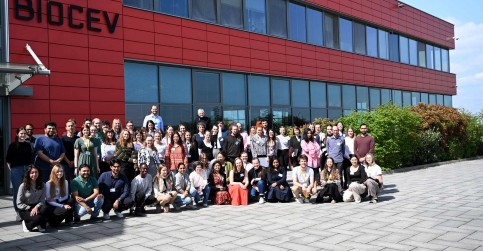
The BIOCEV centre hosted the 28th Biological Days of the Czech-Slovak Biological Society on 25–26 November 2025. This year’s meeting, focused on reproductive biology, oncofertility, and oncology, attracted nearly 160 participants, ranging from students and early-career researchers to established scientific leaders.
The team of Institute of Biotechnology of Czech Academy of Sciences at the BIOCEV center, led by Renata Zobalova and Jiri Neuzil, has shown that mitochondrial respiration is a requirement for early tumour growth. A study just published in Cancer Research reveals that cancer cells with aberrant mitochondrial respiration activate an intriguing salvage mechanism: using horizontal mitochondrial transfer, they acquire fully functional mitochondria from neighbouring host cells.
An international team of scientists led by the Institute of Biotechnology of the Czech Academy of Sciences at the BIOCEV center has elucidated a key mechanism that enables extremely rapid liver regeneration. A study published in the prestigious journal Nature Communications shows that during regeneration, the liver uses toxic ammonia for its renewal. It converts it into glutamine, a substance necessary for the production of DNA and RNA during rapid cell division.
The Institute of Biotechnology of the Czech Academy of Sciences (IBT) achieved excellent results in the government's Evaluation of Research Organizations according to Methodology 2017+ (M17+) for the period 2019–2023.
Three outstanding scientists who are among the world leaders in their fields, five male experts, and one female expert will today receive the prestigious Praemium Academiae 2025 award and the Lumina quaeruntur prize from Radomír Pánek, President of the Czech Academy of Sciences. ...
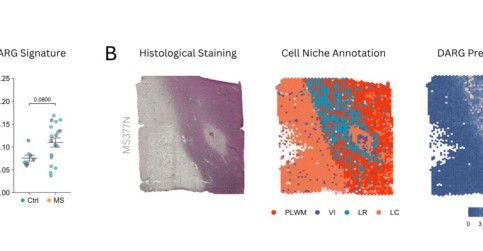
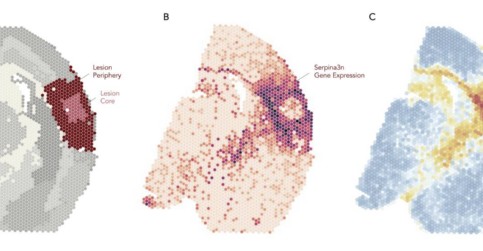
An unusual type of brain cell may play a key role in progressive multiple sclerosis (MS), likely contributing to the persistent inflammation that characterizes this disease. The discovery by an international team of experts opens a promising new path toward developing effective therapies for this neurodegenerative disorder. The study, published in the prestigious journal Neuron, involved researchers from the Institute of Biotechnology of the Czech Academy of Sciences (IBT) at the BIOCEV center.
The 30th Symposium on Biology and Immunology of Reproduction (SBIR) took place at Chateau Liblice, bringing together leading experts and young scientists in reproductive biology, immunology, and related fields. This year’s event was jointly organized by the Institute of Biotechnology of the Czech Academy of Sciences and the Institute of Molecular Genetics of the Czech Academy of Sciences, under the leadership of Assoc. Prof. Kateřina Komrsková and Dr. Dominik Filipp.
Bioinformatics is fundamentally reshaping modern biology, transforming raw data into life-saving insights.
Add your perex
Prague Symposium on Cancer Metabolism is a leading scientific meeting featuring the latest discoveries in cancer metabolism research. With its limited-attendance format, it offers meaningful scientific exchange between students, researchers, and clinicians interested in this rapidly evolving research field.
The tubulin code is an alphabet that cells use to control the behavior of their skeleton – the microtubules. This code influences neuronal development and brain plasticity (the ability to change the strength of connections between neurons), and its disruption is linked to neurodegenerative diseases such as Parkinson’s and Alzheimer’s disease. ...
Two prominent figures of European science – Professor Emanuela Tolosano from the University of Turin and Dr. Carsten Janke from the Institut Curie in Orsay/Paris – are joining the International Advisory Board (IAB) of the Institute of Biotechnology of the Czech Academy of Sciences (IBT). In this context, the institute also expresses its gratitude to Professor Marie-Paule Roth, who has decided to step down from the board.
The Institute of Biotechnology of the Czech Academy of Sciences (IBT) was awarded the prestigious HR Excellence in Research Award by the European Commission. This award recognizes IBT's commitment to continuously improving working conditions for researchers and maintaining high standards in human resources in research.
Structural Mechanisms of Regulation of Human Nedd4-2by the 14-3-3ŋ Dimer and Calcium lons
Polyglutamylation As a Novel Post-Translational Modification of Intermediate Filaments
A novel genetically encoded dual edged non-canonical amino acid carrying a diacetylene moiety
Glycosaminoglycans Modulate Semaphorin-Plexin Signaling in Axon Guidance
Introducing a new method for membrane protein interactions analysis
A collaborative research effort of two institutes of the Czech Academy of Sciences, the Institute of Biotechnology (IBT) and the Institute of Experimental Medicine (IEM), funded by the Czech Science Foundation, led to the discovery of new insights into glioblastoma metabolism. Recently published in Oncogene, the new study shows that horizontal mitochondrial transfer occurs in glioblastoma animal models and explains why brain cancer cells really need mitochondria with functional respiration. ...
The workshop is intended for early-career researchers (ECRs) at BIOCEV and other life science institutions.
Lost in Translation: The Story of Iron and Mitochondrial Ribosomes
Professor Franca Ronchese, Programme Leader, Malaghan Institute of Medical Research, Wellington, New Zealand
From March 20 to 22, 2025, the historic premises of the Nový Zámek chateau in Nové Hrady hosted the XXI Discussions in Structural Molecular Biology and the 8th User Meeting of the Czech Infrastructure for Integrative Structural Biology (CIISB). The conference welcomed 125 participants, who attended 27 scientific lectures, 9 short talks, and viewed 51 poster presentations
Do you believe in Got(s)? (glutamic oxaloacetic transaminases)
Development of pancreatic endocrine lineages on single cell level
Horizontal mitochondrial transfer is the common denominator of more than 20 types of cancer. A team of scientists led by Professor Jiří Neužil from the Institute of Biotechnology, Academy of Sciences of the Czech Republic, at the BIOCEV Centre has spearheaded a study summarizing the findings of this process in the prestigious journal Cancer Cell. The publication may motivate the development of new approaches in anti-cancer therapy.
In November the Institute of Biotechnology (IBT) is set to open a new laboratory, marking a historic milestone. For the first time, a foreign scientist will lead a research group at the institute, bringing fresh expertise and international collaborations.
Looking for an efficient way to store, share, and reuse raw experimental data from molecular biophysics?
Explore Transcriptomics at GeneCore and Get Inspired for Your Next Grant
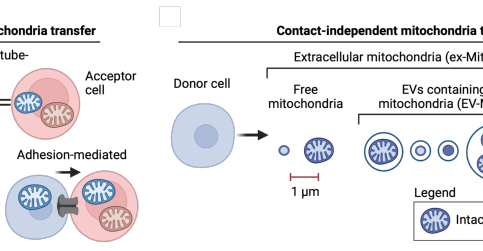
Horizontal mitochondrial transfer (HMT) presents a phenomenon where mitochondria move between cells including mitochondrial DNA (mtDNA), in most cases with a functional impact for the cell that obtains mitochondria and, sometimes, also for the cell that loses these organelles. This phenomenon has been uncovered relatively recently, with first reports in the 90s of the last century.
Antibiotic resistance - some structural biology insights
Protein Production Facility – DNA & Proteins for Your Research
Horizontal Mitochondrial transfer: a new cancer hallmark with clinical relevance
Vestec, Czech Republic - The Instruct-ERIC research infrastructure gathered on November 21-22 at BIOCEV to discuss the present and future of structural biology. Hosted by the Institute of Biotechnology (IBT), the meeting brought together leading European researchers providing access to cutting-edge technologies and methods in the field to explore the future directions and accents in the European landscape of infrastructures.
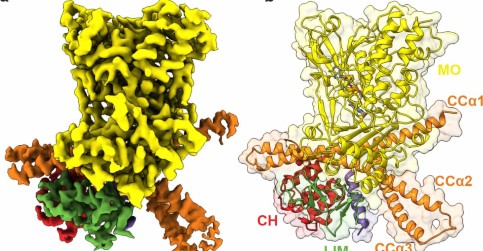
Researchers from the Faculty of Science at Charles University, three institutes of the Czech Academy of Sciences (IMG, IBT and IOCB), BIOCEV and CEITEC have made a remarkable advancement in understanding how cells regulate their inner framework. In a study recently published in Nature Communications, the team has uncovered the precise molecular mechanisms behind the protein MICAL1, which plays a crucial role in maintaining cell shape and movement. ...
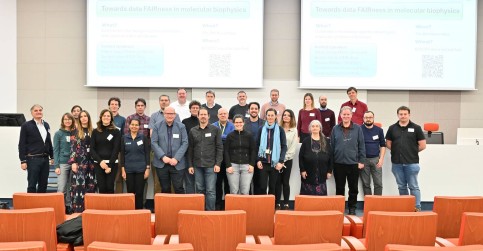
Vestec, Czech Republic — Last week, the Institute of Biotechnology hosted the MOSBRI conference at BIOCEV, where leading researchers, data repository experts, and biophysicsist convened to address critical challenges in the field: effective data management and accessibility. The two-day event, held on November 7th and 8th, fostered discussions on advancements in interoperability and integrative approaches to data sharing and analysis.
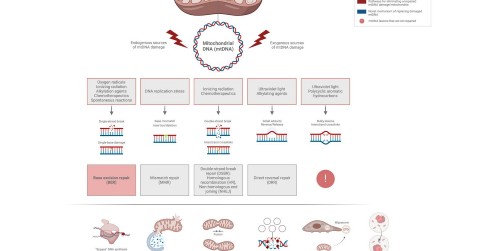
Teams of researchers from the Institute of Biotechnology led by prof. Jiri Neuzil and the Institute of Experimental Medicine led by dr. Pavel Vodicka and dr. Sona Vodenkova recently published a review paper in the highly acclaimed journal Trends in Cancer, focusing under the title of Mitochondrial DNAdamage, repair and replacement.
Introduction of novel phage endolysins as a tool for eradication of biofilm-associated multidrug-resistant Gram negative pathogens
A team of scientists from the Institute of Biotechnology of the Czech Academy of Sciences (IBT CAS) and the Institute of Experimental Medicine of the Czech Academy of Sciences (IEM CAS), supported by colleagues at the Institute for Clinical and Experimental Medicine (IKEM), has made significant strides in understanding how the brain recovers after a stroke. ...
In a recognition of computational biology's power, this year's Nobel Prize in Physics celebrates the breakthrough solution to one of science's most persistent challenges: the protein folding problem. This achievement, made possible through the innovative combination of bioinformatics and artificial intelligence, demonstrates how validated, machine-readable data drives modern scientific discovery.
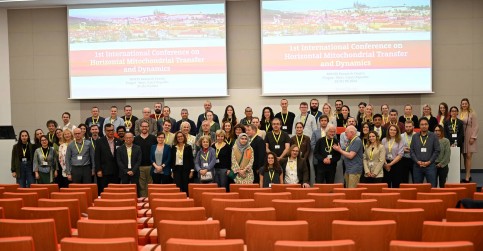
On October 24 and 25, 2024, the First International Conference on Horizontal Mitochondrial Transfer and Dynamics (HMTD) took place at the BIOCEV center in Prague. The main organizer was Prof. Jiří Neužil, head of the Laboratory of Molecular Therapy at the Institute of Biotechnology.
One of the main challenges of contemporary medicine is posed by the resistance of pathogens to antibiotics. An important step in countering it has now been made by researchers from IOCB Prague, in collaboration with colleagues from the Institute of Microbiology and the Institute of Biotechnology of the Czech Academy of Sciences. ...